How to Reduce Fuel Use When Towing a Caravan
Travelling locally just makes more sense right now.
You don’t have to go far to have a good trip. In fact, some of the best ones are closer to home — staying a bit longer, settling in, and making the most of where you are.
Caravan and camping has always worked that way. It gives you the freedom to slow things down, change plans if you need to, and travel in a way that suits you.
Fuel might shape how you plan your trip, but it doesn’t have to stop it. A few small changes when towing can help you go further, without giving up what makes a road trip good in the first place.
1. Get your weight right
The heavier your setup, the harder your vehicle works and the more fuel it uses.
Start with the basics:
- Aim for around 8–12% ball weight (in line with manufacturer limits)
- Keep heavier items low and close to the axle
- Remove anything you don’t need from your vehicle and caravan
Even small changes here can make a noticeable difference. A lighter, balanced setup is easier to tow, uses less fuel, and feels more stable on the road.
If you’re unsure your setup is right, it’s worth getting it checked professionally. There are plenty of experienced providers who can help with weights, setup and towing confidence and you can find them through our members directory.
2. Slow it down
Speed has a bigger impact than most people realise, especially when towing.
Wind resistance increases quickly above 90–95 km/h, so easing back, even dropping from 100 to 90 km/h, can help reduce fuel use.
Fuel use also increases quickly at higher speeds. Even dropping from 110 km/h to 90 km/h can save several litres of fuel per 100 kilometres when towing, so easing back can make a noticeable difference.
It also changes the feel of the trip. You’re not rushing to get there, with more time to take it in, pull over, and enjoy where you are.
3. Improve your aerodynamics
Less drag means less fuel. A few simple tweaks:
- Remove roof racks when they’re not in use
- Keep bulky gear and bikes off the roof where you can
- Close windows and hatches while driving
- Keep your setup as streamlined as possible
Air resistance increases the faster you go, especially when towing, so reducing drag wherever you can helps your vehicle work more efficiently.
It might not seem like much, but it all adds up, especially over longer drives or into headwinds.
4. Don’t underestimate your tyres
Your tyres do more work than you think, especially when you’re towing.
- Check pressure on both your tow vehicle and caravan
- Adjust for your load
- Don’t forget the spare
Under-inflated tyres create more resistance, which means more fuel use and extra strain on your vehicle. Keeping them at the right pressure is one of the easiest ways to improve efficiency.
You’ll usually find the recommended tyre pressures in your vehicle handbook or on the placard inside the driver’s door, and your caravan manufacturer or dealer can provide guidance for your setup.
If you’re unsure, your local tyre specialists can help you get it right.
5. Drive smoother, not harder
How you drive has a big impact on fuel use, especially when you’re towing extra weight.
- Accelerate gently
- Keep a steady speed
- Use cruise control on flat roads
- Let the engine brake on the way down
Frequent braking and accelerating uses more fuel, so the smoother you can keep your driving, the more efficient your trip will be. Looking ahead and anticipating traffic and road conditions also helps avoid unnecessary speed changes.
It also makes towing feel more controlled and less tiring, particularly on longer drives or when conditions change.
6. Keep your vehicle well maintained
A well-maintained vehicle runs more efficiently, especially when it’s working harder to tow.
Before you head off:
- Check your air filter, particularly after dusty trips
- Top up fluids and engine oil
- Check wheel alignment
- Make sure your transmission is running as it should
Small issues like a clogged air filter, low fluids or poor alignment can make your engine work harder than it needs to, which increases fuel use and wear over time.
Regular servicing through one of our approved service providers will help identify problems early, before they turn into something bigger when you’re on the road.
It’s not just about saving fuel, it’s about reliability, safety, and having confidence in your setup while you’re out there.
7. Plan your route and conditions
Not all kilometres are equal.
Headwinds, hills and traffic all use more fuel, so it pays to think ahead before you hit the road.
- Travel earlier when winds are often lighter
- Avoid peak traffic where you can
- Plan your fuel stops
- Combine fuel, food and breaks
Wind, in particular, can have a bigger impact than people expect. Driving into a strong headwind increases resistance, which means your vehicle has to work harder and use more fuel, especially when towing a caravan.
A bit of planning around timing, conditions and distance can make a noticeable difference. It can also mean less time behind the wheel and more time enjoying where you’ve pulled up.
8. Use the right gear
Your vehicle is built for towing, so it’s important to use it the way it was designed.
- Use towing mode if you have it
- Keep the engine in its most efficient range
- Use manual mode where needed to avoid gear hunting
Towing places extra load on your engine and transmission, so using the right settings helps reduce unnecessary strain and improves fuel efficiency. Letting the vehicle sit in the right gear, rather than constantly shifting up and down, also helps maintain a more consistent speed.
Using the right gear isn’t just about fuel — it’s about smoother driving, better control and getting the most out of your vehicle while you’re out on the road.
Getting ready for a road trip?
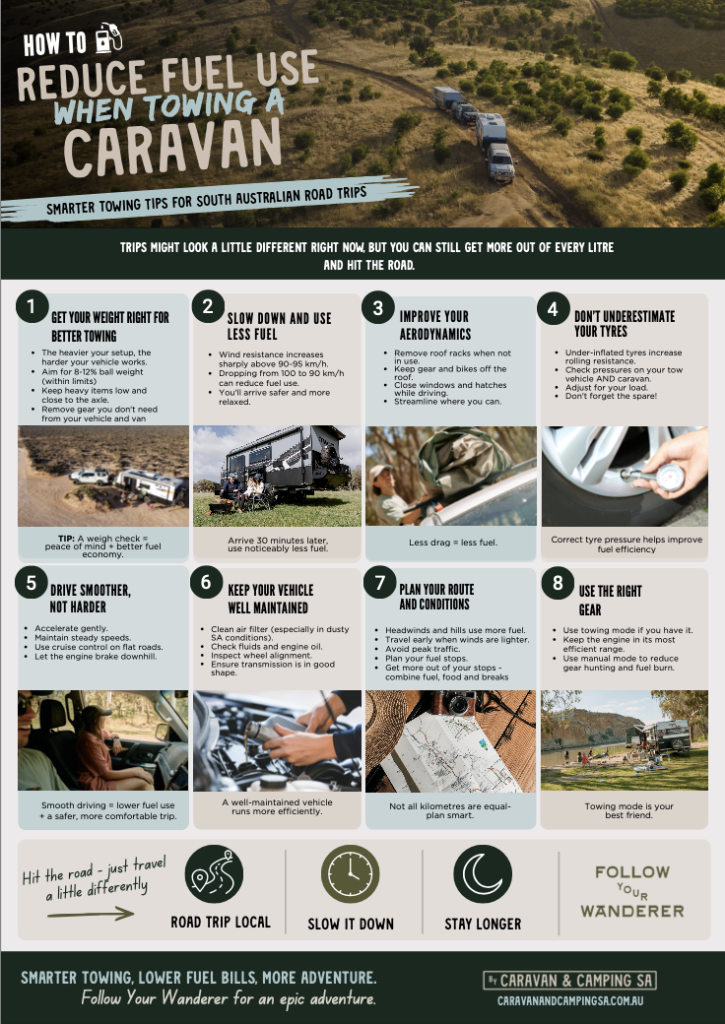
Download our one page fuel saving towing guide and keep it handy on the road.
Travel a little differently
Right now, it’s less about how far you go and more about how you do it.
Staying closer to home, slowing things down and spending more time in one place doesn’t take away from the experience, it often makes it better.
Caravan and camping has always been about flexibility, freedom and making the most of where you are. A few small changes when towing can help you travel more efficiently, without giving up what makes a road trip worthwhile.
Follow Your Wanderer
Road Trip local.
Slow it down.
Stay a little longer.
Latest Posts
School Holiday Road Trips: Easy Adventures from Adelaide
September 28, 2026
School Holiday Road Trips: Easy Adventures from Adelaide The spring school holidays are here, and you don’t need to travel…
Visibility, Blind Spots and Sharing the Road
June 4, 2026
Can You See Me? Visibility, Blind Spots and Sharing the Road When preparing for a road trip, most caravan and motorhome…
SA & NT Industry Heroes Recognised Nationally
May 14, 2026
South Australia and Northern Territory Industry Heros Recognised at National Caravan Industry Conference The Caravan Industry Association of Australia (CIAA) National Conference is…
How to Reduce Fuel Use When Towing a Caravan
April 22, 2026
How to Reduce Fuel Use When Towing a Caravan Travelling locally just makes more sense right now. You don’t have…